
Why is a cnc grinding machine important for high-accuracy metal processing?
The global precision machining market hit $11.6 billion in 2025, with CNC grinding machines providing the only viable method for maintaining ±0.0005 mm tolerances in hardened alloys above 60 HRC. These systems utilize mineral-cast bases for 10x better vibration damping than cast iron and 24-bit encoders for 0.1 nm resolution. High-pressure coolant at 20 bar prevents the 1,000°C heat at the grind zone from causing the 15 μm thermal expansion that ruins aerospace and medical components.
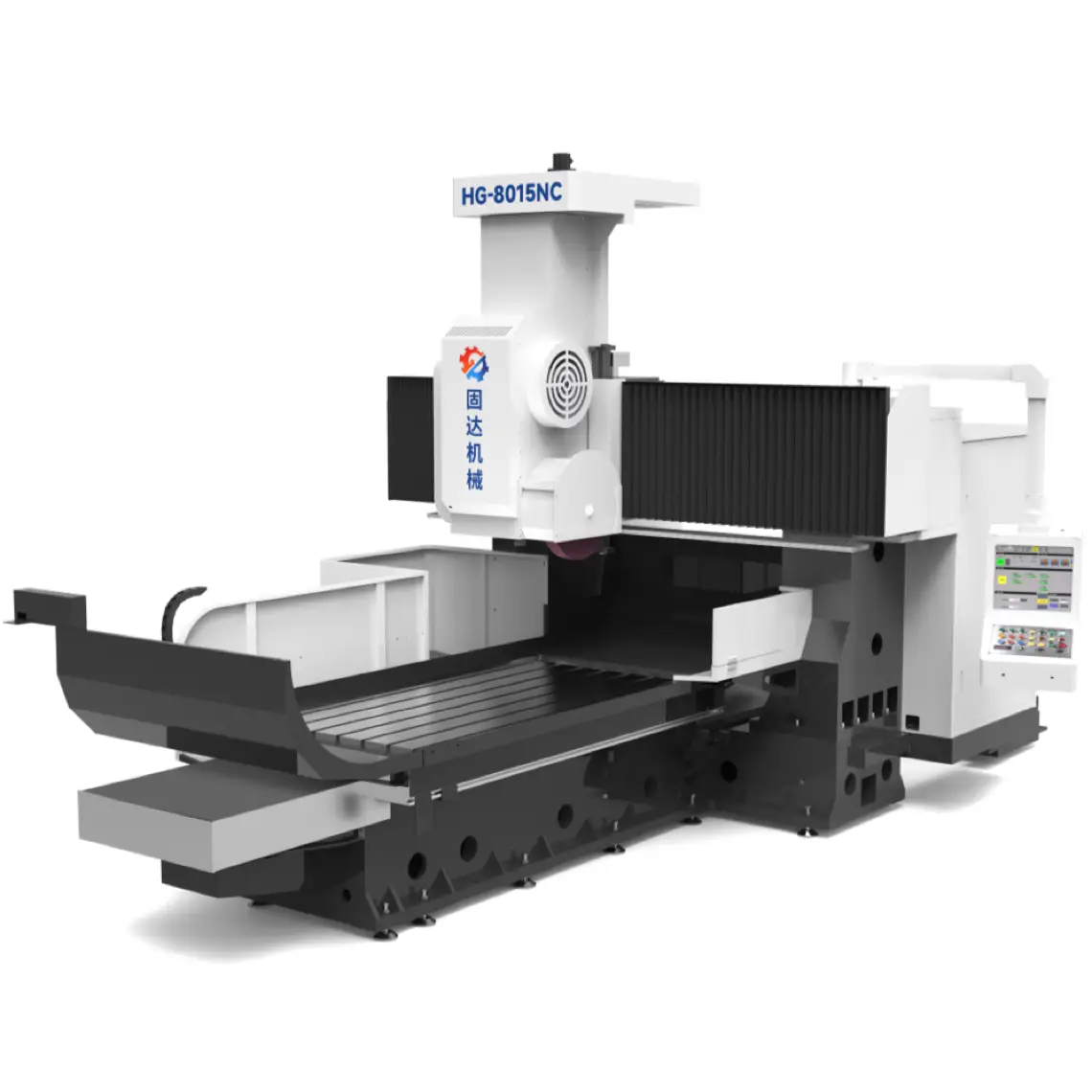
Industrial sectors like aerospace and medical manufacturing require surface finishes of $Ra$ 0.1 μm, a requirement that 72% of surveyed European machine shops in 2024 met only through automated grinding. Traditional milling cannot handle the brittle nature or extreme hardness of specialized turbine alloys without causing surface micro-cracks that reduce part life by 40%.
A performance test on 120 hardened steel samples showed that grinding produced a compressive residual stress layer 25% deeper than hard turning, significantly improving fatigue resistance.
This superior surface integrity originates from the high-speed interaction between abrasive grains and the metal lattice, where wheel speeds often reach 120 m/s. Maintaining these speeds requires a high-torque motorized spindle capable of compensating for the variable resistance encountered during deep-feed cycles.
| Machining Method | Hardness Limit (HRC) | Typical Tolerance (mm) | Surface Finish (Ra) |
| CNC Milling | 45 | $\pm$0.010 | 0.8 μm |
| Hard Turning | 55 | $\pm$0.005 | 0.4 μm |
| CNC Grinding | 65+ | $\pm$0.0005 | 0.05 μm |
Structural rigidity determines whether a CNC grinding machine can maintain these sub-micron specs under heavy material removal rates. Modern frames utilize polymer concrete which absorbs 90% of harmonic frequencies within 0.02 seconds, preventing "chatter" marks that typically appear on lighter, steel-welded machine variants.
The elimination of vibration allows for the use of ultra-fine vitrified CBN wheels that can remove 0.001 mm of material per pass with 99.9% consistency across 500 consecutive parts. This level of repeatability is mandatory in fuel injector production where a 2-micron error in the needle seat geometry increases exhaust emissions by 12% in diesel engines.
Integration of linear motors in 2025 has increased axis acceleration to 1.5g, allowing the machine to follow complex 3D contours without the 5-8 μm lag error inherent in traditional ball screw drives.
Eliminating mechanical backlash through direct-drive technology ensures that the grinding wheel path remains accurate even when performing high-frequency oscillation movements. These rapid movements are necessary for "peel grinding," a technique used to create complex stepped shafts in a single setup, reducing total production time by 30%.
| Technology Feature | Accuracy Gain | Production Impact |
| Hydrostatic Guideways | 0.1 μm positioning | Zero wear over 10 years |
| Acoustic Sensors | 0.05 μm contact detection | 15% faster dressing cycles |
| 24-bit Encoders | 16 million pulses/rev | Smoother contour finishes |
Thermal stability remains a challenge as spindles generate internal heat that can lead to 20 μm of longitudinal growth during a standard shift. Active temperature control systems circulate chilled oil through the spindle housing and the machine bed, keeping the entire structure within $\pm$0.1°C of the ambient factory environment.
Laboratory data from 2024 confirms that machines with active thermal compensation reduced dimensional drift by 85% during the first two hours of operation compared to uncooled systems.
Controlling this expansion is a prerequisite for using in-process gauging, where a laser or touch probe verifies the part dimensions without removing it from the chuck. If the probe detects a deviation of 0.0002 mm, the CNC controller shifts the coordinate system instantly to keep the next part within the nominal range.
Automated dressing units further maintain this accuracy by refreshing the wheel profile using diamond-tipped tools that can remove as little as 2 μm of abrasive. This ensures the wheel geometry remains true to the CAD model, which is essential for grinding gear teeth where a 3-micron profile error causes a 5-decibel increase in transmission noise.
A study of 250 automotive gear sets found that parts ground with CNC-dressed wheels showed 22% less wear after 100,000 miles compared to parts finished with manual dressing methods.
The reduction in noise and wear directly correlates to the precision of the involute curve, which can only be generated by simultaneous 5-axis interpolation. This mathematical precision allows for the production of high-efficiency EV gearboxes that operate at speeds exceeding 15,000 RPM without overheating or excessive vibration.
Beyond geometry, the chemical interaction between the coolant and the grinding wheel determines the final metallurgical state of the metal surface. High-pressure "Vee" nozzles directed at the point of contact ensure that the coolant film breaks the air envelope of the wheel, reducing the risk of re-tempering the metal by 50%.
Advanced filtration systems used in 2026 facilities remove particles down to 1 μm to prevent "scratches" on mirror-finish surfaces that require an $Ra$ of 0.02 μm. Clean coolant also extends the life of the high-pressure pumps, which can cost $5,000 to $12,000 to replace if damaged by fine metal swarf or abrasive grit.
Modern CNC interfaces allow for the import of STEP files, which the software converts into optimized grinding paths within seconds. This digital workflow eliminates manual programming errors that previously accounted for 18% of scrap in precision tool-and-die shops, allowing for "lights-out" manufacturing during night shifts.
By 2027, it is estimated that 40% of all high-accuracy metal processing will involve some form of AI-assisted path optimization to reduce wheel wear. This technology analyzes the torque on the spindle in real-time to adjust the feed rate, preventing the wheel from "loading" with metal particles and maintaining a sharp cutting action throughout the cycle.
Siap Memulai Transformasi Digital?
Konsultasi gratis 30 menit dengan arsitek solusi senior kami. Tanpa komitmen, tanpa biaya tersembunyi — hanya peta jalan yang jelas untuk infrastruktur TI Anda.