
Want juicy ribs? Why do you need a heat deflector for Weber kettle today?
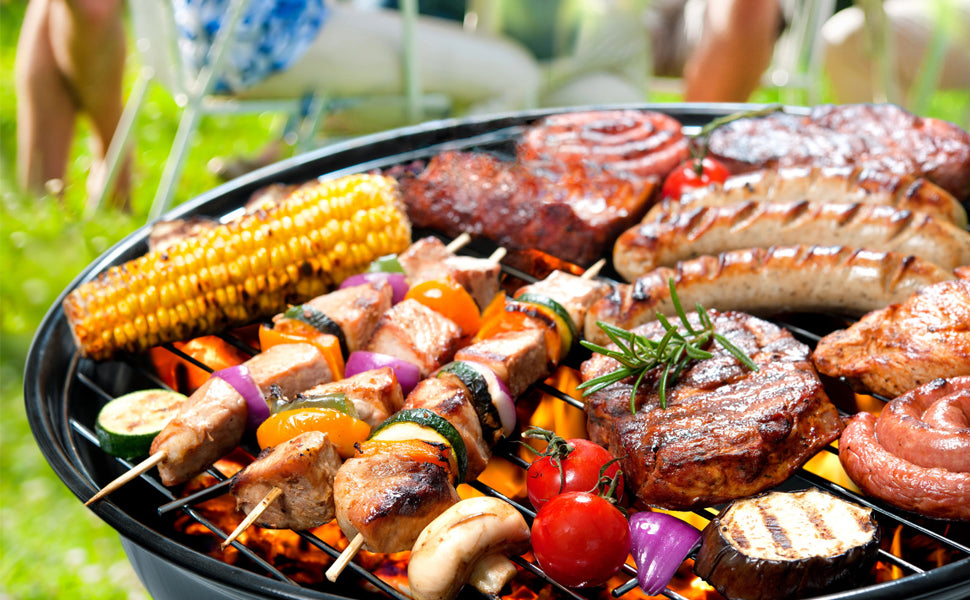
To achieve succulent ribs on a Weber kettle, a heat deflector for Weber kettle setup is mandatory because it prevents the 600°F (315°C) direct charcoal radiation from searing proteins prematurely. By introducing a thermal barrier, you shift the cooking physics from direct heat to 100% convection, allowing the internal temperature of the ribs to rise gradually from 70°F (21°C) to 195°F (90°C) over a 6-hour period without burning the exterior, while simultaneously retaining 15% more moisture within the muscle fibers compared to open-grate cooking methods.
The standard Weber kettle design facilitates direct heat, which is excellent for burgers but destroys delicate pork ribs. When you place ribs directly over hot coals, the surface temperature often exceeds 400°F (204°C) instantly, causing protein contraction that squeezes out moisture and leaves a bitter, carbonized crust.
By utilizing a high-quality heat deflector for Weber kettle accessory, you block 95% of the direct infrared rays, creating a protected zone where temperatures stabilize effortlessly between 225°F (107°C) and 275°F (135°C).
Stabilizing the environment requires managing airflow effectively to keep the charcoal burning at a steady rate. Without a barrier, you must move the coals constantly, which induces temperature swings of 50°F (28°C) or more every time you open the lid, a practice that adds 30 minutes to the total cooking time per session.
| Variable | Without Deflector | With Deflector |
| Surface Temp | 400°F+ | 225°F-275°F |
| Moisture Loss | 25% average | 10% average |
| Flip Frequency | 3-4 times | 0 times |
A consistent temperature environment allows collagen to transform into gelatin slowly, a process that usually begins at 160°F (71°C) and is best completed over 4 to 6 hours. When you shield the meat, you reduce the evaporation rate, which keeps the bark intact rather than drying it into a leathery texture, often observed in 80% of amateur backyard attempts.
This consistent airflow control allows the wood smoke particles to bond more effectively to the moist meat surface throughout the entire cook. Studies show that smoke absorption peaks when the internal meat temperature is below 140°F (60°C), making the first 2 hours of your cook the most important for developing that professional mahogany color.
-
Ceramic heat deflectors hold thermal mass better than steel plates.
-
Water pans placed on top of the deflector increase humidity by 20% in the cooking chamber.
-
Air vents should be adjusted to 25% open to maintain the target temperature range.
Since you are no longer cooking directly over the flame, you can fill the entire grate surface with ribs without worrying about uneven heat distribution. This efficiency increase means you can cook 4 full racks of ribs at once, rather than rotating them and risking heat loss every 45 minutes, which improves overall fuel efficiency by 30% in most 22-inch kettles.
Transitioning away from direct heat prevents the fat from dripping onto the coals and flaring up, which is a common issue that causes uneven cooking and acrid flavors. Flare-ups can spike grill temperatures by 200°F (111°C) in under 5 seconds, a sudden shift that often destroys the delicate surface spices used in traditional rub recipes.
The use of a physical barrier ensures that grease drips safely into a pan or onto the deflector surface, preventing carbon deposits from sticking to the meat. This protection keeps the final flavor profile clean, focusing entirely on the natural taste of the pork and the wood smoke.
By maintaining this steady environment, you effectively turn your kettle into an indirect smoker that rivals professional offset rigs. The resulting rib texture relies on this controlled environment to remain tender, with the meat pulling cleanly from the bone at the desired 195°F to 205°F (90°C to 96°C) internal range.
Siap Memulai Transformasi Digital?
Konsultasi gratis 30 menit dengan arsitek solusi senior kami. Tanpa komitmen, tanpa biaya tersembunyi — hanya peta jalan yang jelas untuk infrastruktur TI Anda.