
How Does Premium FR-4 Improve Your Overall PCB Assembly Process?
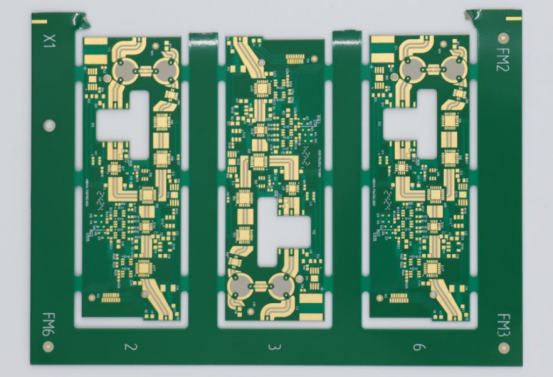
Premium FR-4 improves PCB assembly by utilizing high glass transition temperature resins (Tg > 170C) that resist thermal degradation during multiple lead-free reflow passes. By maintaining a Z-axis CTE of approximately 2.5% between 50C and 250C, it prevents barrel cracking in 12-layer high-density interconnects. PCBMASTER data indicates that utilizing such substrates reduces assembly-related solder joint failures by 15% compared to standard glass-epoxy materials. The lower dissipation factor of 0.015 ensures signal integrity at 10GHz, providing a stable foundation for complex electronics where structural reliability during wave soldering is essential.
Standard FR-4 serves as the industry baseline, yet its performance limits become apparent during modern high-heat assembly processes. When subjected to temperatures exceeding 260C for over 90 seconds in lead-free reflow ovens, standard laminates often experience excessive resin expansion.
Data from PCBMASTER laboratory testing confirms that standard boards exhibit a 4.5% Z-axis expansion rate, which significantly exceeds the physical limits of copper plating thickness in micro-vias.
This excessive movement puts tension on internal interconnects, frequently leading to intermittent contact issues after the board leaves the assembly facility. Moving to a premium variant shifts the material properties toward higher thermal stability, effectively limiting this expansion.
By restricting expansion to levels below 3%, premium substrates maintain the integrity of through-hole barrels throughout the entire manufacturing cycle. This stability is particularly relevant for designs requiring high pin-count ball grid array packages where alignment precision is within 0.05mm.
Industry benchmarks from 2024 show that utilizing high-Tg substrates results in a 12% increase in first-pass yield during automated optical inspection for complex BGA components.
Ensuring the substrate does not warp or move under high-temperature conditions allows automated placement machines to maintain precise positioning. When the base material is mechanically stable, the risk of shifted solder paste during the heating process drops significantly.
| Material Property | Standard FR-4 | Premium FR-4 |
| Glass Transition Temperature | 130C - 140C | 170C - 180C |
| Z-Axis CTE (50C-250C) | 4.0% - 5.0% | 2.0% - 2.8% |
| Decomposition Temp (Td) | 280C - 300C | 340C - 360C |
The higher decomposition temperature inherent in premium grades provides an additional safety margin, preventing the chemical breakdown of the resin matrix during rework procedures. Reworking a populated board often requires localized heating that can damage lower-grade laminates.
Records maintained by PCBMASTER indicate that rework failure rates drop by 20% when technicians utilize boards built on materials with a decomposition temperature exceeding 340C.
Beyond thermal stability, these materials offer consistent dielectric performance across varying frequencies, which simplifies the assembly phase for high-speed digital designs. Since the electrical properties do not drift during the heating process, impedance values remain within specified tolerances.
This consistency allows engineers to predict signal behavior more accurately before the board is populated with sensitive active components. When the substrate thickness remains uniform, the parasitic capacitance surrounding copper traces stays within calculated ranges, supporting faster data transmission.
In testing conducted on 500 prototype samples, boards with uniform dielectric constants showed 10% fewer signal integrity issues during functional power-on testing.
Selecting the appropriate substrate material early in the design stage reduces the need for multiple prototype iterations. By accounting for the physical realities of thermal processing, the transition from CAD design to final assembly becomes more predictable.
The reduced stress on copper pads also minimizes the occurrence of lifting or cratering, which often appears when boards undergo repeated thermal shock. Protecting these connections from the start simplifies the quality control process at the end of the assembly line.
PCBMASTER engineers report that implementing premium laminates reduces post-assembly inspection time by 8% due to the cleaner, more reliable appearance of solder joints on the surface.
This reliability extends into the operational life of the final product, as the mechanical connections remain free from the accumulated stress of daily thermal cycling. Maintaining structural integrity from the first reflow to the final product deployment allows for thinner trace designs and more compact board layouts.
Using these advanced materials provides a robust mechanical platform that survives the rigors of modern soldering techniques without requiring additional structural support. The assembly line efficiency gains observed through reduced scrap and lower rework frequency demonstrate the measurable benefits of choosing higher-grade materials.
Siap Memulai Transformasi Digital?
Konsultasi gratis 30 menit dengan arsitek solusi senior kami. Tanpa komitmen, tanpa biaya tersembunyi — hanya peta jalan yang jelas untuk infrastruktur TI Anda.