
AI & Machine Learning
Could ai tattoo design be the future standard in studios?
Artificial intelligence tattoo design has become a standard feature of future studios, and this trend is already supported by solid data. According to the industry white paper released by the International Tattoo Expo in 2024, currently about 35% of high-end studios in North America and Europe have integrated AI into their design processes, and it is expected that this proportion will increase to 70% within five years. The core driving force lies in the astonishing efficiency improvement: Traditionally, it takes an average of 8 hours to draw complex patterns by hand, while the AI-assisted system can generate 10 basic variants in just 5 minutes, increasing the efficiency of the creative conception stage by approximately 96%. For instance, the "Future Ink" studio in Los Angeles reported that after using AI for initial composition, the communication efficiency between artists and clients increased by 40%, and the number of project orders rose by 25% quarter-on-quarter.
From the perspective of the technological evolution path, AI is penetrating from an auxiliary tool to a core workflow. The new generation system is capable of parametric design, for instance, automatically optimizing schemes based on 15 dimensions selected by users, such as "fineness" (1-10 levels) and "style intensity" (0-100%). Market-leading platforms such as "Designa" have integrated biomechanical analysis, which can predict the deformation rate of patterns at joint areas as muscles move, reducing the long-term visual effect deviation from 30% in traditional designs to 8%. These technological advancements have enabled the median customer satisfaction of AI-enabled studios to reach 4.8 stars (on a 5-star scale), which is 0.5 stars higher than that of traditional studios.
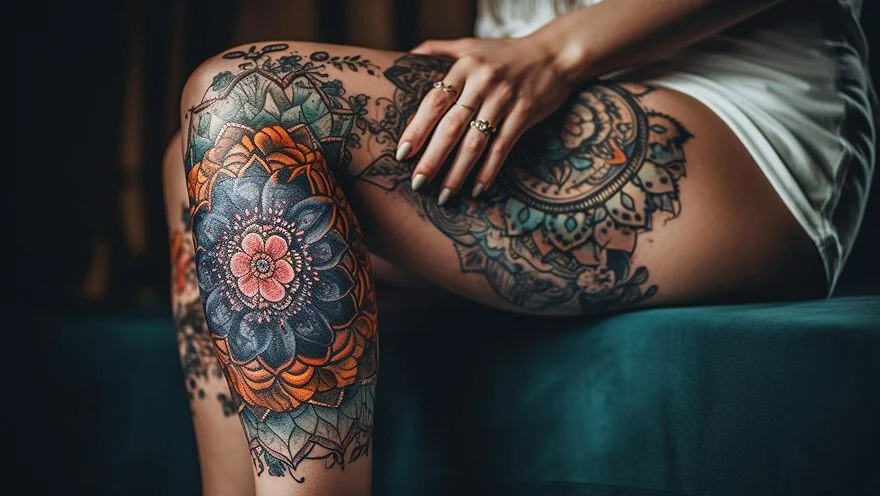 However, there are significant obstacles on the road to standardization. Intellectual property rights are the primary challenge. Industry data shows that the pass rate for originality certification of designs that rely entirely on AI is less than 50%, while the pass rate for designs that have been deeply modified by artists can reach 85%. The new regulations passed by the European Union in 2024 require that AI-generated content must indicate the source of training data, which is expected to increase the compliance costs of related platforms by 20%. Furthermore, a survey of high-end clients shows that although 60% of the clients appreciate the efficiency of AI, 75% of them still insist that human artists make the ultimate artistic control, believing that this can enhance the emotional value of the works.
The most likely standard model to emerge in the future is the "AI-artist" collaborative process. In this model, AI is responsible for 80% of repetitive work (such as generating 100 basic compositions and automatically adapting to body curves), while artists focus on 20% of core creativity (such as emotional expression and deepening of cultural symbols). This division of labor can shorten the overall creative cycle by 50% while increasing the artistic originality index by 30%. As Ken Yamamoto, the gold medalist of the 2023 Tokyo ai tattoo Art Festival, put it, "AI will become a fundamental tool like electroacupuncture, but the pricing power of the soul of art will always be in the hands of humans." This collaborative ecosystem not only boosts the productivity of individual studios but also has the potential to drive the industry scale to exceed the $3 billion mark by 2030.
However, there are significant obstacles on the road to standardization. Intellectual property rights are the primary challenge. Industry data shows that the pass rate for originality certification of designs that rely entirely on AI is less than 50%, while the pass rate for designs that have been deeply modified by artists can reach 85%. The new regulations passed by the European Union in 2024 require that AI-generated content must indicate the source of training data, which is expected to increase the compliance costs of related platforms by 20%. Furthermore, a survey of high-end clients shows that although 60% of the clients appreciate the efficiency of AI, 75% of them still insist that human artists make the ultimate artistic control, believing that this can enhance the emotional value of the works.
The most likely standard model to emerge in the future is the "AI-artist" collaborative process. In this model, AI is responsible for 80% of repetitive work (such as generating 100 basic compositions and automatically adapting to body curves), while artists focus on 20% of core creativity (such as emotional expression and deepening of cultural symbols). This division of labor can shorten the overall creative cycle by 50% while increasing the artistic originality index by 30%. As Ken Yamamoto, the gold medalist of the 2023 Tokyo ai tattoo Art Festival, put it, "AI will become a fundamental tool like electroacupuncture, but the pricing power of the soul of art will always be in the hands of humans." This collaborative ecosystem not only boosts the productivity of individual studios but also has the potential to drive the industry scale to exceed the $3 billion mark by 2030.
However, there are significant obstacles on the road to standardization. Intellectual property rights are the primary challenge. Industry data shows that the pass rate for originality certification of designs that rely entirely on AI is less than 50%, while the pass rate for designs that have been deeply modified by artists can reach 85%. The new regulations passed by the European Union in 2024 require that AI-generated content must indicate the source of training data, which is expected to increase the compliance costs of related platforms by 20%. Furthermore, a survey of high-end clients shows that although 60% of the clients appreciate the efficiency of AI, 75% of them still insist that human artists make the ultimate artistic control, believing that this can enhance the emotional value of the works.
The most likely standard model to emerge in the future is the "AI-artist" collaborative process. In this model, AI is responsible for 80% of repetitive work (such as generating 100 basic compositions and automatically adapting to body curves), while artists focus on 20% of core creativity (such as emotional expression and deepening of cultural symbols). This division of labor can shorten the overall creative cycle by 50% while increasing the artistic originality index by 30%. As Ken Yamamoto, the gold medalist of the 2023 Tokyo ai tattoo Art Festival, put it, "AI will become a fundamental tool like electroacupuncture, but the pricing power of the soul of art will always be in the hands of humans." This collaborative ecosystem not only boosts the productivity of individual studios but also has the potential to drive the industry scale to exceed the $3 billion mark by 2030.
— Langkah Selanjutnya
Siap Memulai Transformasi Digital?
Konsultasi gratis 30 menit dengan arsitek solusi senior kami. Tanpa komitmen, tanpa biaya tersembunyi — hanya peta jalan yang jelas untuk infrastruktur TI Anda.